
SQL Editor
The SQL Editor is where a query is written and run. The editor has SQL syntax highlighting and IntelliSense aware of the connected database's schema.
Its command bar has Execute, plus a set of toggles:

- Trace - when on, data modification queries (INSERT / UPDATE / DELETE) are traced with log recording, so their log records can be inspected and applied to a page. When off, data modification queries still run and roll back as normal, but no log records are captured
- Clear Buffer Pool - empties the buffer pool first (
DBCC DROPCLEANBUFFERS) so every page the query touches is physically read. Don't use this on a server anyone else is using - Disable Read-Ahead - makes the engine read pages individually instead of pre-fetching large blocks, giving a much clearer picture of the access pattern
- Results - when on, the query returns its result set, shown in the Results tab. When off, results are discarded - useful for cutting down noise on queries where only the storage engine activity matters
- Messages - shows the Messages tab, e.g. row counts and other output messages
While a query is running, Execute is replaced by a Stop button to cancel it.
TIP
- Ctrl + Enter executes from the keyboard
- If text is selected in the editor, Execute runs just the selection
- Ctrl + mouse wheel changes the editor font size, and the size is remembered
Multi-statement queries
Only one statement can be traced at a time. Executing a query with multiple statements or GO batches gives the error:
Multi-statement queries cannot be traced. Select a single statement then right click and choose 'Trace query selection'.
For scripts where the statement of interest needs setup or teardown around it - building a temp table first, say - mark just that statement: select it, right-click, and choose Trace query selection.
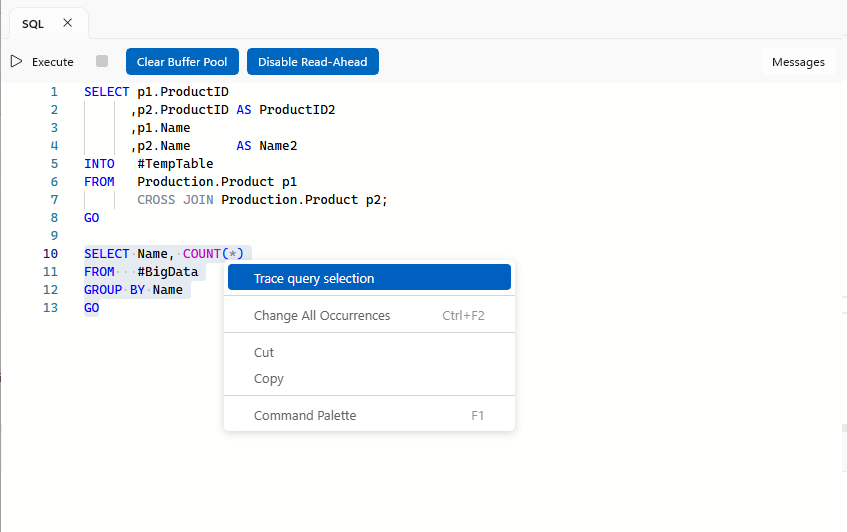
The marked statement stays highlighted in the editor:
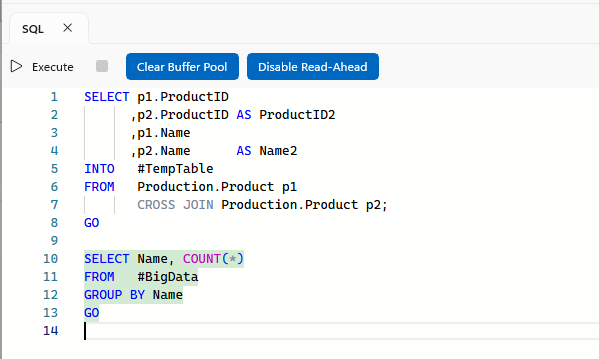
On Execute, everything before the marked statement runs first as untraced setup, the marked statement runs with the trace, and everything after it runs as untraced teardown - so the timeline shows only the statement of interest.
To remove the marker, right-click and choose Clear query selection.